Visualizing the Cycle of Sustainable Rice Farming
How do you film a 4-month crop cycle in 48 hours? Inside Mensch’s Indonesia video production for BII & Rize’s sustainable farming initiative
Our job at Mensch Creative was to document this impact-driven storytelling. We needed to capture the reality of the agronomists on the ground and the farmers whose livelihoods depend on these innovations. The objective was clear: show the transformation of a rice paddy from a muddy seedbed to a golden harvest.
At British International Investment (BII), the ledger isn't just balanced by profit—it’s balanced by human progress. As the UK’s development finance institution, their mandate ties directly to the UN Sustainable Development Goals. They don't just write checks; they fuel initiatives that put food on tables and money in the pockets of those who need it most.
Enter Rize. Backed by the Wavemaker Impact Fund (a BII investee), Rize is a platform dedicated to transforming agriculture in Southeast Asia. Their goal? To introduce sustainable techniques that increase yields while lowering carbon emissions.
our Months of Biology vs. Two Days of Production
Here is the unglamorous reality of production: biology doesn't care about your call sheet.
A full cycle of rice farming—from seeding to harvest—takes approximately four months. We were on the ground in Solo, Indonesia, for exactly two days. We were tasked with capturing an agricultural documentary arc that spanned a season, but we only had 48 hours to do it.
To make matters more volatile, we landed smack in the middle of Indonesia's rainy season. In this part of the world, the weather doesn't just change; it attacks. You can have blistering, lens-fogging humidity one minute and a torrential, gear-destroying downpour the next.
Coordinating this from a distance was a logistical tightrope walk. The office team had to sync with the field team, navigating time zones and language barriers to ensure we weren't just shooting "farming," but specifically capturing the proprietary methods Rize was implementing. We had to visualize a timeline that didn't exist in the present moment.
The Craft: Time Travel Through Terrain
Since we couldn't bend time, we had to bend geography.
The solution lay in an aggressive, strategic "recce" (scouting). The team realized that not every farmer plants at the exact same time. By treating the region around Solo as a patchwork quilt of time zones, we could simulate the full four-month cycle by moving physically through the landscape.
We scouted locations where farmers were just wading into the mud to plant seeds. A few kilometers away, we found fields mid-growth, lush and vibrant green. Further down the road, we located paddies that were golden, heavy, and ready for harvest. We didn't wait for the rice to grow; we drove to where it already had.
The Heat & The Flood
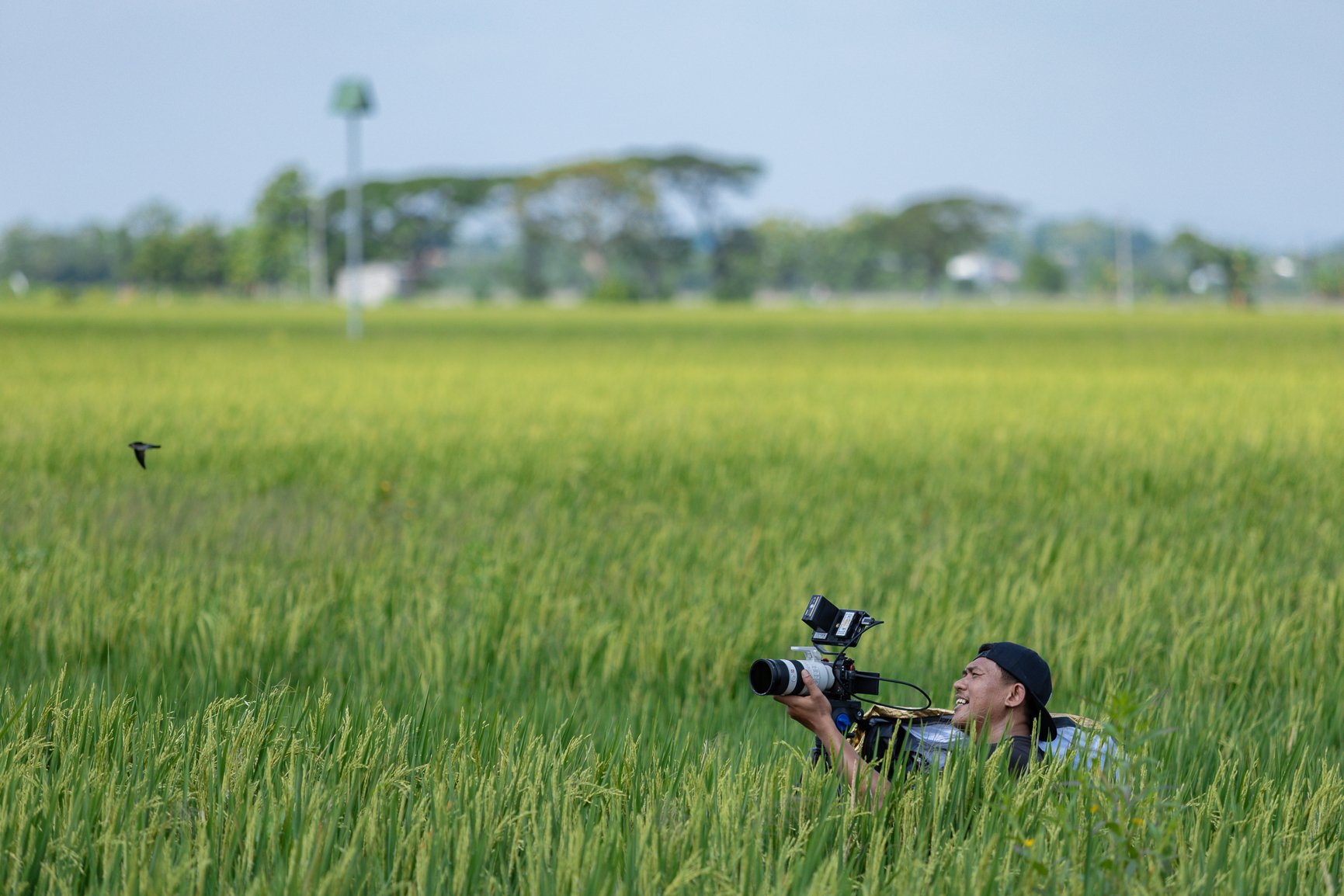
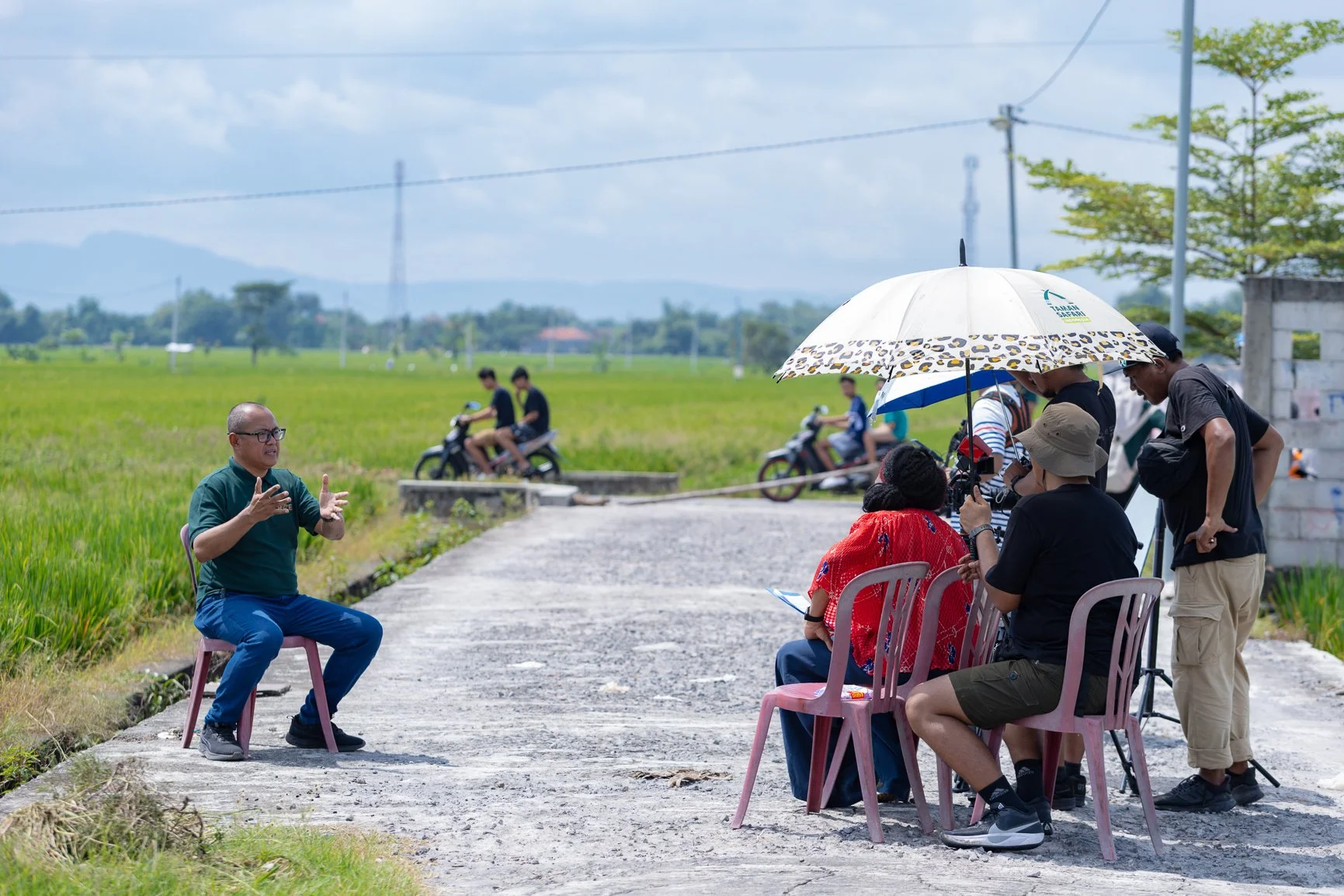
The team operated in a cycle of "cover and shoot." We’d have cameras rolling under scorching tropical sun, capturing the sweat on a farmer's brow and the texture of the soil. Thirty minutes later, dark clouds would roll in, forcing the crew to scramble, shielding thousands of dollars of cinema gear under tarps and umbrellas against flash rains.
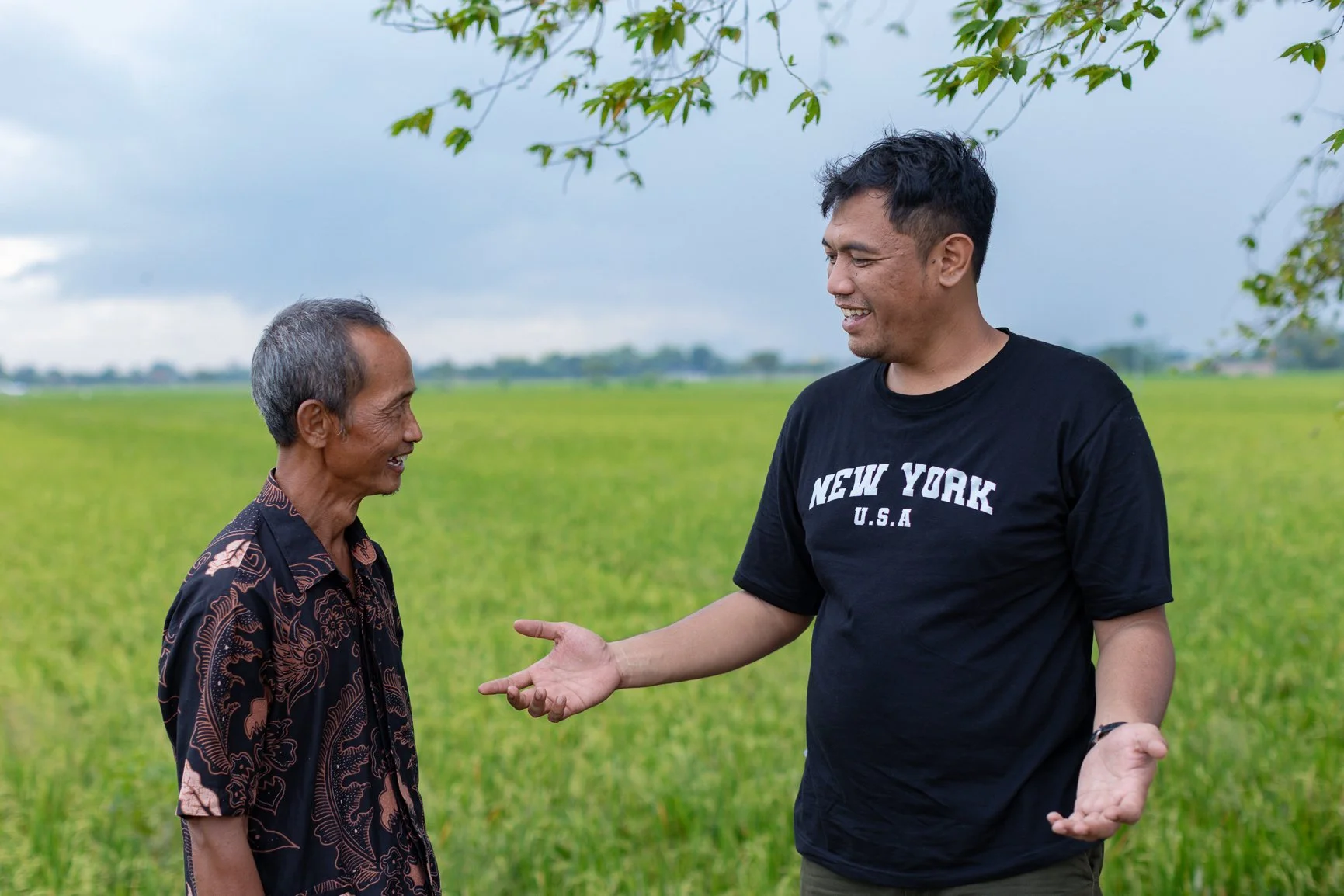
The Perspective: We utilized drones to capture the vast scale of the paddies, contrasting the green expanse against the grey storm fronts. On the ground, we got low—mud-level low—to capture the intimacy of the Rize agronomists teaching farmers how to optimize their crop.
We weren't just capturing B-roll; we were capturing the tension and the triumph of the environment.
The Impact: Seeing is Believing
Why go through the trouble of "time traveling" across Solo? Because sustainable farming footage needs to be more than just aesthetic; it needs to be evidentiary.
By stitching these disparate locations into a cohesive narrative, we provided BII and Rize with a visual timeline of success. We showed the full scope of their work—not just the promise of a seed, but the reality of the harvest. This footage serves as proof that sustainable methods work, offering a tangible look at BII investment impact on the ground.
We turned a logistical impossibility into a seamless story of food security, resilience, and economic growth. It wasn't easy, but real impact rarely is.